Deciding Between Tankless and Tank Hot Water Systems
You're about to go into the new construction phase, or perhaps your tank has tanked and you're checking out your options. Maybe you're rennovating and hot water supply is on the list. You've heard tidbits of info along the way from friends, family, or maybe your home store, but are still uncertain which way to go with your project. At the end of this, you still may be uncertain but you may have some additional information to help with your decision.
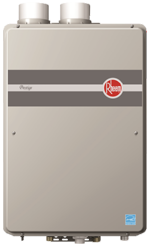 What does and doesn't a tankless hot water system provide?
While talking with people who are considering a tankless system, I have discovered a common thread that often connects them. They tend to equate tankless with endless, but what is "endless"? Now it's time to clarify this important aspect: What is "endless"?
What does "endless hot water" mean?
Say, I give you one million post-it notes and ask you to stick one on each car that drives by you on a 1-lane road. Gentlemen, start your engines! The cars start driving by slowly and you start sticking those post-its. One per car. You're doing great! Let's speed up the cars. Whew... you're still getting it done, but on the edge of missing some. Let's speed up the cars! Oh no! Now, some cars are going by without post-it notes on them. Your missing some! Let's speed up the cars! Ohhhh boy! Lots of cars are being missed now. In fact, most are going by without post-its on them. STOP the cars! The system is breaking down.
Translated to heating your water: Let's make the cars the water, the road is the water pipe, you are the tankless unit, and the post-its are heat. As the water flows through the tankless unit, heat (post-its) is being applied to it. Guess what happens if the water flows through too quickly? That's right. Not all of it can be heated because it's going by too quickly for the ability of the tankless unit to heat it - just like cars going by too quickly for you to apply post-its. Solutions: 1) slow down the water, or 2) get a bigger heating unit (similar to you getting more people helping you 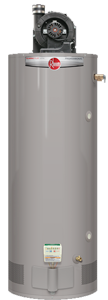 stick post-its on cars). A third option is also to consider multiple tankless units in several locations within your home. Which solution can or should be applied to your application (should you decide to use tankless)?
Let's apply the above to your home. The amount water demand you'll have - and need to heat - depends on your scenario. Are you a single person who uses very little water or are you a family of six with showers, clothes-washers, dishwashers, etc. running regularly and simultaneously? Those are very different scenarios in regard to the demand on your system to be able to heat water within a specific amount of time. If you have the latter situation, it's very possible that you could exceed the capacity of some tankless units, so the unit could possibly need to slow down the amount of water delivered in order to ensure it's actually able to heat it all as it goes through the unit. How that affects you will depend on how much your demand relates to the volume the unit can process.
In summary, "endless hot water" means that a tankless unit can heat water forever as it passes through the unit, but "endless" does not mean there is an unlimited volume of hot water for any specific amount of time. For example, A unit may be able to supply hot water for one month-long shower, but perhapd not for 3 10-minute showers that are running simultaneously. This is a unit-specific measurement that needs to be researched based on your needs.
Pros & Con Comparison of Tankless Water Heaters & Tanks
Pros of Tankless
Pros of Traditional Tank
|
Cons of Tankless
Cons of a Traditional Tank
|
Because of the diverse needs of hot water systems, there are actually hybrid systems available now that combine tanks and tankless heaters. If one or the other does not match your situation, a hybrid may be worth investigating.
No matter your project, be sure to consult professionals in your area who are well-versed in the latest options, and who are experienced in matching systems with your available utilities and your volume needs. Only then, will you be able to decide which system is best suited for your project.


